Bill
Burgess /
Research
& Analysis /
Players
Bill
Burgess /
Research
& Analysis /
Players
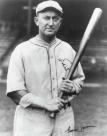 [From Bill Burgess'
Ty Cobb Memorial
Collection]
[From Bill Burgess'
Ty Cobb Memorial
Collection]
 Did
All of Ty Cobb's Team Mates Hate Him?
Did
All of Ty Cobb's Team Mates Hate Him?
Ty
Cobb's Friends: 82 Liked Him, 36 Claimed Ty Played Clean
Was Cobb
the greatest all-around baseball player who ever lived?
PART
I
LEONARD COBB SPEAKER AFFAIR
By Bill Burgess III
Every once in a while, in baseball discussion groups, one is asked,
"Didn't Cobb once fix a game?", or
"Wasn't Ty accused of throwing a game?" |
And I was recently
asked about the Leonard/Cobb/Speaker controversy. This was one of the traumas
of Cobb's career. Although he & Speaker |
were totally exonerated
by Judge Landis, there remained many critics, who sneered that Landis had
looked past their "misdeeds". |
Allow me to give
my understanding here. You will find no whitewash here. |
|
Dutch Leonard had
been a good pitcher in the AL. Boston, '13-18, and Detroit, '19-21, '24-25.
In '14 he had an ERA of 0.96 for 224 innings, |
and 19-5. Of course,
he had Speaker, Hooper & Lewis performing their circus catches in the
OF, to make the whole staff look real good, but still, |
0.96 IS
startling! By '25, he was on
Cobb's Detroit staff, and not getting along with his manager. He rep was
that he ducked the good teams |
and loaded up on
the weak sisters. Cobb's lost it when Leonard refused to take the mound when
ordered to, to help the team. So
Cobb put him on |
the market, for
$7,500., and no one claimed him. So he passed out of the league. And he blamed
Cobb and also Speaker who he hoped would pick |
up
his waiver. Speaker had been his teammate and friend on the '13-15 Red Sox.
But Tris passed on him. There is no doubt in my mind that
Tris |
would have called
Cobb and gotten Ty's version of why he was trying to unload
Dutch. Dutch burned with frustration
and held Ty & Tris responsible |
for railroading
him out of the league and his career. He was only 33 yrs. old. He withdrew
to his home in Fresno, California.
|
|
In
May, 1926, Dutch came East and contacted the office of the Tigers and informed
Detroit owner, Frank Joseph Navin, that he held proof that
Ty |
& Tris had fixed
and bet on a game, played on Sept. 25, 1919. He contacted Ban Johnson's office
as well. After traveling back
and forth, Navin |
& Johnson, believed
Leonard's story, and agreed to buy him off for $20,000, the amount that Leonard
believed that Detroit owed him. So, Dutch |
surrendered his
2 letters to them. They, in turn, notified Judge Landis of the events, as
a courtesy. |
|
Next, Johnson contacted
the 2 players and called them into his office. Cobb and Speaker denied the
charges and Johnson totally thought they were |
lying. He told them
they had to quit. On Nov. 2, Ty left a letter of resignation at Navin's office.
The next day he boarded a train and left for Atlanta, |
where he told the
press that he had resigned. On
Nov. 29, 1926, Speaker's resignation was announced, with no explanation
given. The BB
world |
buzzed and wondered
what was going on. In the meantime, 2 newspapers had gotten wind of the
controversy, and threatened to publish what |
they had. Judge
Landis had conducted his own investigation. Dutch refused to come back to
Chicago, saying pople "got bumped off there", so |
Landis went to Cal.
He bided his time for the moment. By this time, Cobb & Speaker, who
originally had acquiesced to being coerced into the
railroad |
to keep the story
from breaking in the national media, now realizing that the story was going
to break anyway, changed their minds and decided to |
fight the charges.
They hired attorneys and began commencing their legal defense in tandem.
They demanded that Landis release whatever he had. |
That, on top of
the 2 newspapers giving him a deadline to announce everything, forced his
hand, and he made the announcement on Dec. 21, 1926. |
What a jolt that
was to the BB community!! |
|
Leonard's
Accusation
|
Before he could
rule on that case, another case exploded in his face. So he dealt with another
big scandal before he got back to the Leonard/Cobb case. |
Where Leonard had
accused the others (and himself) of fixing the game in question, he had no
evidence outside of his word, that there had been a |
plan to pre-arrange
the results of the game. His only evidence, the 2 letters, strangely never
referred in any way to a fix. They only referred to
betting. |
Leonard's accusation
was based on his hope that people would assume
that where there is smoke, there is fire. This was his basic
charge. |
Dutch accusation
was based on the hope that people would assume
that if there was evidence of betting, then the betters
probably fixed the
results. |
So, that was Dutch
Leonard's thinking, and the entire premise of the
accusation. Betting was beyond
question. Fix? His word against
2 teams. |
The day before the
game in question, Cleveland had clinched 2nd place for the '19 season. On
the day of the game in question, Leonard was talking |
under the grandstand
with Joe Wood and Tris Speaker, and they plotted to fix the game for Detroit
to win. Just then, according to Leonard, Cobb |
came along, joined
the conversation and agreed to plan for Detroit to win, and they all agreed
to bet $2,000. on the game. That
was Dutch Leonard's |
accusation. The
only thing missing is that he had no evidence of anything, except his own
word, along with 2 letters, which spoke clearly of a bet, |
but not on what
the bet was based on. It could have been a bet about anything. And he had
no evidence whatsoever of any fixing of anything. |
So, Dutch was
desperately hoping that others would make assumptions, and draw conclusions
based on his version of events. |
|
By January 27, 1927,
Landis had finally dealt with & gotten clear of the other scandal, and
he announced his verdict in the Leonard/Cobb affair. |
He said that he
could not find any proof of any fix at all. He exonerated both Cobb &
Speaker, completely. He implied that they had bet, when he
|
said that what they
had done was inappropriate & reprehensible, but not corrupt.
|
|
Landis vs. Johnson |
There were so many
sub-plots going on. Ban Johnson had tried to coerce both players out of his
league. He said neither would play in the AL ever |
again. And when
he did that, he didn't know it, but he saved them. Because it was a pre-ordained
forgone conclusion, that whatever he proclaimed, |
was sure to be reversed
by Landis. Landis ordered both men restored to their teams, which instantly
gave them their unconditional releases, |
making them free
agents. Ban Johnson's handling of this affair was so shockingly incompetent,
that the other owners voted him out of office. |
It ended his career.
He had stated that he knew they were innocent of any wrongdoing, but had
to be sacrificed due to appearances.
Ban, the |
Autocrat, never
reticent at flexing his authority, took the draconian extreme of quietly
muscling Baseball's 2 most glittering superstars out of
BB. |
And therein lay
his self-created, well-deserved
downfall. For he was running
up against Baseball equivalent of a brick
wall. One who was
easily |
his equal as an
arbitrary, autocratic, authoritarian power
broker. Judge
Landis. For whatever Johnson was to decree, Landis was hell-bent
to |
undecree.
So, it's very fortunate that Johnson tried to coerce them out of BB,
without the approval of Landis. |
|
Here is my personal
take. When Cleveland clinched 2nd place, they intended to break training
and carouse late into the wee hours. Wood told |
this to Leonard,
and they both felt it would be an opportunity to cash in, due to Cleveland
being ill-prepared to contest the next day's battle at |
full strength. Cobb
also felt no big deal in betting. Although he always claimed to not having
bet, I don't believe him. I believe he bet. |
I believe that Speaker
may or may not have had anything to do with anything. But Joe Wood, his best
friend and team mate did accuse Tris & Ty |
of having put up
part of the betting money. Leonard
lied about everything except the bet.
So, Speaker involvement, if any, isn't
clear-cut.
But |
Wood's accusation,
in conjunction with Leonard's does look as if it tips the balance in favor
of Tris betting against his own team. Which, if true, |
would look more
damaging than Cob betting on his own team to
win. But Joe Wood's statements
in his Lawrence Ritter interview's is inconsistent. |
In his letter to
Leonard, he wrote that Cobb told him he didn't bet, and that he believed
him. However, in his Ritter
interview, he says that both |
"Cobb & Speaker had put up some of this money to make the
bet". So, if they had, and Wood was the
one holding the betting money, he would
|
have known this
before he wrote his letter to Leonard, in which he seems NOT to have known,
whether Cobb put up money. |
So, Joe Wood impeaches
himself somewhat here. And that
is death as a credible witness. So, due to this inconsistency in Wood's
statements, |
I consider Speaker's
involvement as unclear & questionable. |
|
Furthermore, at
that moment, BB had no rule against betting. So no rule was broken. No fix
was ever thought of. And Cobb, not being the manager, |
was in no position
to direct Tiger pitching. In
'19, Cobb was just another player on Detroit, albeit their supreme star.
|
So, I don't believe
there ever was an attempt to fix a game, only bet on one, upon hearing that
the Indians were going to party long into the night. |
And no rule was
broken. Leonard took the $20,000.
he got for selling his letters, and started a grape vineyard in Fresno, Cal.
and became a millionaire |
by selling wine.
But he died early in life, July 11, 1952, at the age of
60. These are the main
events. Charles Alexander gives
a concise account of |
this controversy
in his book, Ty Cobb, in the chapter, "Is there any decency left on Earth?",
pp. 185-194. |
|
But Landis' problem
with that was the simple fact that they had broken no BB law, rule, regulation,
whatever. He had no nail on which to hang them, |
so to speak, even
if he had wanted to. Which he
clearly didn't want to. Landis
had been a lawyer, before he became a Federal judge, and he thought
|
in legal
terms. And he realized that
he had nothing. No club with which to bludgeon them
with. But his problem went much
deeper than legalities.
|
Judge Landis actually
liked both Cobb & Speaker. And he loved the institution of
baseball. All the
way. In 1915, he had told the Federal League that
|
he would not look
kindly upon anything that harmed the institution of
baseball. He opposed the Federal
League because he mistakenly thought that it |
was, for some reason,
an "outlaw" league. Apparently, he had forgotten that the American League,
in 1901, was once an "outlaw" organization, |
according to the
National League. While he had
been wrong in his opposition to the Federal L. in '15, he was right about
Cobb/Speaker in Dec., '26. |
He knew that to
hurt them would harm BB. And he would never have done that unless he believed
in his heart that they had done something to truly |
betray or sell out
BB. Judge Landis "looked past"
nothing. It wasn't in his character to protect anyone who betrayed BB. And
even though he did really |
love and admire
Speaker & Cobb, that wouldn't have saved them, if Landis had believed
them to have been corrupt. He liked them but he loved BB more.
|
|
And what did Landis
really have anyway. The word of a man, who had motive to lie. HUGE motive
to lie. So much motive, that he incriminated himself |
to bring down the
objects of his hatred. And his letters, if true, should have mentioned a
fix. But they didn't. |
|
An item I haven't
mentioned here, it that this bombshell, had caused huge headlines across
the land. And it was all pro-players, and anti- Navin, |
Johnson &
Landis. Landis may have been
high-handed and arbitrary in his rulings before and after, but he wasn't
a fool or stupid. He probably |
knew
that if he expelled the biggest stars, without good reason, he would have
harmed BB in a way that was unacceptable to him. |
And lest we forget.
To hurt Cobb & Speaker, would have supported Ban Johnson, who had given
the 2 players the back of his ungrateful hand. |
Landis and &
Johnson had nothing but utter contempt for each other. The most helpful thing
Johnson did for Speaker and Cobb was to announce that |
neither would ever
play in his league ever again. And therein laid their salvation! Landis was
not about to let that stand. In
some ways, |
it appeared as if
both Johnson & Landis treated this incident as a canvas on which to play
out their personal power struggle for who ruled |
baseball, than about
the fates of 2 superstars. And
the proof of that, is when McGraw tried to sign Ty, Landis wrote
him, |
"Lay
off Cobb." Landis was totally in earnest about rubbing Johnson's nose in
it. He insisted that they be returned to their teams' reserve lists.
|
|
Ultimately, Landis
comes out looking much more credible than
Johnson. Landis, at least called
in 2 entire teams, and questions them as to |
whether
or not the game in question had been played on the up &
up. Johnson did almost
nothing. |
Johnson's private
detectives would not be able to inform him on whether or not the game was
fixed. Did Johnson
care? Apparently not a
whit. |
|
I personally believe
that what Ty, Joe and Dutch did was very wrong and should not have been done.
It was tasteless, classless, inappropriate, |
reprehensible,
lamentable, regrettable, unethical, immoral, unprincipled, etc. But not illegal,
criminal or corrupt. They tried to turn a quick buck |
over inside information.
Similar to insider trading today. Like Martha Stewart. One should not try
to take advantage, profit, or cash in on |
highly classified,
inside, secret information. I
would not have fined or suspended them, since they technically broke no rule.
Shameful as it was, |
it
would be also wrong to enforce retroactively a rule which didn't exist
yet. I believe in the subsequent
rule against betting on baseball, |
regardless if it's
for or against your team. Pete Rose did wrong. There SHOULD have been a rule
against betting in Ty's time. |
|
But John McGraw
OWNED a gambling casino in Havana. Hornsby was betting on horses every day
at the track. Cap Anson had been |
a
betting man. In fact, Landis had once called Hornsby into his office and
demanded that he stay away from the track and horses and
Hornsby |
told
him his betting on horses was none of his business and to go to hell. Landis
backed down. What else could he do? Rogers was quite right,
|
morally and
legally. Morally, Landis was
not a stickler for morality. Every day he served as Commissioner, he looked
the other way at the owners' |
gentlemen's agreement
not to allow blacks into the MLs. So he wasn't a stickler on moral
issues. |
|
Ty & Tris were
initially cowed by Ban Johnson, who sat there behind his big desk, and smugly
read them their "Miranda rights".
They were probably |
shocked and embarrassed
and furious that Johnson refused to believe them. Johnson gave them an ultimatum.
Quit quietly and we'll keep this all |
hush-hush, and no
one will know. Who will believe you after seeing these
letters? The riot act
worked. Ty & Tris were bluffed
into going quietly |
into the
night. Or so it appeared for
a short while. But not for
long. Because once 2 newspapers
caught wind of the story, they threatened Landis |
that they'd break
the story if he didn't. And
they gave him a deadline to announce whatever he
had. One of them was the Chicago
Tribune. |
|
Back to controversy.
Later, when the sports community lined up behind Cobb & Speaker,
Ban Johnson put out this fantastic message at
a press |
conference in Chicago, IL, Jan. 17,
1927; |
|
"I don't believe
Ty Cobb ever played a dishonest game in his
life. If that is the exoneration
he seeks, I gladly give it to him.
But it is from Landis that Cobb |
should seek an
explanation. The American League
ousted Cobb, but it was Landis who broadcast the story of his
mistakes. |
|
I love Ty
Cobb. I never knew a finer
player. I don't think he's been
a good manager, and I have had to strap him as a father straps an unruly
boy. |
But I know Ty Cobb's
not a crooked ball player. We
let him go because he had written a peculiar letter about a betting deal
that he couldn't explain |
and because I felt
that he violated a position of trust.
|
|
Tris Speaker is
a different type of fellow. For
want of a better word I'd call Tris
cute. He knows why he was forced
out of the management of the |
Cleveland
club. If he wants me to tell
him I'll meet him in a court of law and tell the facts under
oath. |
|
The American League
is a business. When our directors
found two employees whom they didn't think were serving them right they had
to let them |
go.
Now isn't that enough? As
long as I'm President of the American League neither one of them will manage
or play on our teams." |
|
"I have men working
for me, on my personal payroll, whose business it is to report on the conduct
of our ball players. We don't
want players
|
betting on horse
races or ball games while they're
playing. We don't want players willing to lay down to another
team either for friendship or |
money.
That's why I get these reports.
This data belongs to me, and not to
Landis. The American League
gave Landis enough to show why |
Cobb and Speaker
were no longer wanted by us.
That's all we needed to give him.
I have reports on Speaker which Landis never will get
|
unless we go to
court. |
|
"Judge Landis need
not worry over the correctness of that
interview. I made that statement
then, I'm making it again, and I'll make it when he calls |
me
Monday. |
|
"I only hope he
holds an open meeting. I want
the public to know what the American League did and what Landis
did. |
|
"I sent a detective
to watch the conduct of the Cleveland club two years
ago. I learned from him by whom
bets were made on horse races and |
ball
games. I learned who was taking
the money for the bets. I learned
the names of the bookmakers who accepted the wagers and how
much |
money was won or
lost. I was gathering the
evidence. Now, I watched Ty
Cobb, too. I watched him not
because I thought he was crooked, but |
because I thought
he was a bad manager. Frequently,
I have called him down. I gave
Ty an interview just before he went on his hunting trip
last |
Fall.
He talked to me for two hours.
He was heart-broken and maintained his innocence in that alleged betting
deal which his letter tells about.
I |
told him that whether
guilty or not, he was through in the American
League. I didn't think he played
fair with his employers or with me.
The actual |
facts which caused
this whole explosion came to me early last
Summer. |
|
"Dutch Leonard had
a claim against the Detroit Club. He threatened to sue for
damages. He asserted that he had sworn statements of five
men |
stating that Cobb
had declared he would drive Leonard out of
baseball. Ty always has been
violent in his likes and dislikes.
Those statements of |
his, if carried
to court, would have been damaging to the Detroit
Club. Frank Navin, the owner,
also faced the possibility that, should he refuse to |
settle with Leonard,
the latter would sell two letters, One, of course, was that one written by
Cobb, and the other was that letter of Joe Wood. |
|
"You know the
contents. Both indicate knowledge
on the part of the writers of a plan to bet on a framed ball
game. Cob denies he bet, and
I don't |
think he
did. I say again I think Ty
is honest. But as he couldn't
explain the letter satisfactorily, it was a damaging
document. So on that letter
alone |
the American League
would have been forced to let Cobb go.
Now Speaker was implicated in the deal by statements by
Leonard. I also have
the |
data of my
detective. I called a meeting
of the directors of my league. My
own illness and the pressure of their business delayed the meeting
until |
Sept. 9,
1926. We met in a prominent
Chicago club. We wanted secrecy,
not because it meant anything to us but because we felt we should
|
protect Cobb and
Speaker as much as we could. They
had done a lot for baseball. We
had to let them out, but we saw no reason for bringing |
embarrassment upon
their families. We wanted to
be decent about it. The directors
voted to turn the results of the Leonard investigation
over |
to
Landis. We did that in compliment
to him, not to pass the buck. We
had acted. We thought he ought
to know about it. |
|
When Landis released
that testimony and those letters, I was
amazed. I couldn't fathom his
motive. The only thing I could
see behind that move |
was a desire for
personal publicity. I'll tell
him that when I take the witness stand.
The American League is a
business. It is a semi-public
business |
to be sure, and
we try to keep faith with the public. Certainly we had the right to let two employees go if
we felt that they had violated a trust. |
But Landis had no
right to release the Landis charges. He had taken no part in the ousting of the two
men. It was purely a league,
not an inter- |
league matter, and
there was nothing to be gained by telling the world that we felt Cobb and
Speaker had made mistakes which made them unwelcome |
employees. When I take the stand Monday I may
tell the whole story of my relationship with the
Judge. If he wants
to know when I lost faith in him |
I'll tell him
this. When the Black Sox scandal
broke the American League voted to prosecute the crooked
players. Landis received the
job. After several
|
months had passed
I asked him what he was doing, and he replied:
'Nothing'. I took the case away
from him, prosecuted it with the funds
of the |
American League
and never asked him for help. I
had decided he didn't want to
cooperate. My second break with Landis came over a
financial |
matter.
I do not care to discuss it now, but I will tell about it Monday,
if he wants him to. This statement of mine probably means a new fight
with |
Landis.
But he has chosen to make the public think the American League passed
the buck to him on the Speaker and Cobb
case. That's not
true, |
and I don't intend
to let the public keep on thinking that way. |
|
Johnson also said
that his observations of the Cleveland
club showed that players as
late as 1925 were continually betting on horse racing |
during the baseball
season. One report, Johnson
said, details the story of a pool by the players that netted a profit of
$4,200. We have
no |
objections to players
attending horse races," Johnson said.
"We do object to them betting on races while they are supposed to
be giving their |
best efforts to
the baseball games."
End of press conference. (New
York Times, Jan. 18, 1927, pp. 18, "Johnson Accepts Landis
Challenge") |
And more
self-contradictory, convoluted, hypocritical garbage has not been seen in
this part of the world since. And if good luck holds . .
. |
|
Bottom line. Johnson
was perfectly willing to sacrifice 2 of America's heroes due to
appearances. Well, America wasn't,
and let him know in |
no uncertain
terms! |
|
All throughout the
country, since the first announcements were made, support for the 2 players
came from every spectrum of the BB community. |
On Dec. 23, Dan
Howley went on record with this
statement. "I would stake my
life on Cobb's integrity, and the same goes for Tris Speaker.
Dan |
had been a coach
with the Tigers from 1919-22, & room mates with Dutch Leonard on the road for 2
years. |
|
President Navin
also showed himself to not be up to handling anything but bookkeeping with
aplomb or finesse. He actually came out and stated that |
the reason for his
releasing of Cobb as player and manager was due to his bad managing of the
team, and that 11 Tigers had come to him and asked |
to
be traded. Sports writers were taken aback at this news. One said
that if that were the case, there were a few other managers that were
due |
to be publicly hung
in a town square. Detroit President
Frank Joseph Navin's handling of the whole affair smacked of such Machiavellian
|
machinations of
such epic proportions, that's it's a wonder that the Tigers' fans allowed
him to continue to own the team, so crude was his
incompetence. |
President Navin
may have been many things. A
competent keeper of books & records.
Raised frugality in investing in his team to an artistic
high. But |
as an adept, adroit
manager of a difficult human situation, he was lost, out to sea, over his
head, and out of his sedentary element.
His bumbling, |
unctuous, supercilious,
pedantic, crude manner of conducting this tricky, delicate circumstance left
him bewildered, annoyed and at a loss as what to do. |
I also have 4 CDs
of the Glory of their Times. The CDs give many little tid-bits, such as this
discourse on the Cobb/Speaker/Leonard affair, |
which never made
it into the book, incredibly! One of the men interviewed was Joe Wood, who
gave good inside details. He burns Leonard pretty good. |
When interviewer
Lawrence Ritter tells him about Ty coming clean in his autobiography, Woods
acts very surprised. Here is what he has to say, I'm |
transcribing the
tape here; |
|
Ritter: "The other
book I read was a biography by, uh, Ty Cobb, and at the end of the book,
he has a whole section, and it was all news to me, |
on some mess-up,
with him, you, and Tris Speaker & Dutch Leonard. Would you tell me what
that was all about? |
Wood: "I will. I'm
not going to tell you details, because I wouldn't tell you too much about
this thing because it stinks. When Dutch Leonard got |
through in Detroit,
Cobb was manager. And for that reason he had a gripe against Cobb, and then
he wanted Speaker to take him on over in |
Cleveland, &
Spoke wouldn't take him on. For that reason he got sore at both of them.
Well, in '20, there was a dispute over some betting, & in
|
order to get even,
Leonard claimed this & that, and so on, and, there was a bet placed on
the ballgame, but it wasn't against our club, it was on |
our club. I was
the guy who bet the . . . I had charge of the money. Well, I handled this
through a gate tender, in Detroit, who contacted the |
bookies, and the
money was bet, the money was collected, & this little son-of-a-gun come
down, I know him very well, this gate tender, & brought
|
this money down
to the train as we were leaving Detroit, and I gave him, after keeping equal
splits, for 3 fellas, I gave him, the extra money, |
which amounted to
about $30. or $40. bucks, for placing the bet. This was just the same as
betting on a prize fight or anything else. We bet on |
ourselves. There
was nothing crooked about it on our part. |
Ritter: "How often
did teams bet on themselves? |
Wood: "Never! Never,
that's the only bet I ever made in my life. And just because someone else
wanted to bet on it & I handled the money. But this |
thing in '20 (Black
Sox scandal), it wasn't exactly on the up & up, I have to admit that.
Because I knew from what Cicotte had told me in |
Cleveland that the
White Sox didn't dare win. But I didn't know through a couple of other fellas
on the Detroit ballclub that they weren't going to |
play their heads
off trying to beat us. I'm not saying that they were going to lay down and
give us the game, (garbled). Well anyhow, I knew |
that the White Sox
didn't dare win that year. And this got back to Landis, and he had a letter
that I had written, and, uh, Landis called me |
over to New York
says, 'You write that letter', I said I sure did, there was my name on it,
and Leonard had black-mailed Navin in Detroit for so |
much for that letter,
and he still kept copies of it, & then he went ahead and tried to black-mail,
I don't know how the hell he, small amount |
of money somebody
out there, by going after Cobb & spilling this whole story. Which was
true. I was at a World Series, with Landis down in NY &
|
he says, I know
Landis very well, Judge says, 'We gonna have any trouble over this thing,
Joe', I said 'I don't think so'. 'You let me know and if |
ya do, I'll come
make a trip up to New Haven.' |
Ritter: "What was
the letter you wrote?" |
Wood: "Leonard.
Here he kept this letter that I had written him, after I got home here one
winter, I wrote him, out in Fresno, a letter, same as I |
write to my brother,
I trusted him, I wrote him this letter, he kept it & cashed in on it.
I understand he got $12-15,000. the 1st from Navin in |
Detroit, then they
closed it for awhile and came out with it again. And he kept the letter through
all of that. |
Ritter: "The letter
had that much dynamite in it?" |
Wood: "Yeah. The
letter quoted me the amount of money was bet, his share was enclosed in the
letter. I loaned that son-of-a-bitch $200. to buy his |
1st motor-cycle
in Boston when he 1st joined us. And he made the crack that he didn't mind
what he was doing to Cobb and Speaker but he hated to |
hurt Woodie. But
never the less he did it. That dirty little son-of-a bitch of a Leonard.
He died a millionaire, but he died young (60). A |
great little pitcher
too. But he was a 1st class . . . crook. |
Ritter: "How did
Speaker & Cobb get involved on it? |
Wood: "Cobb &
Speaker put up some of this money to make the bet. And Leonard broadcast
this thing, because Cobb let him go, and Speaker |
wouldn't take him
on. |
Ritter: "Is it for
this reason that both Cobb and Speaker left their jobs at Cleveland &
Detroit? |
Wood: "Yeah, yeah.
But they didn't get out of baseball. They went to the Athletics. I'd like
to see what Cobb had to say about it, because |
(garbled). They
got together with an attorney in Detroit, my greatest friend, Spoke &
Cobb, and they got a bunch of stuff written up, type- |
written & deposited
in a vault in a bank in Cleveland, & if they'd a chased Cobb & Speaker
outta baseball this would'a all come out. |
Ritter: "Cobb has
a whole chapter on it. He doesn't hide it at all. |
Wood: "Well, he
didn't hide some of it. But he doesn't tell it as it was, I'll bet you a
million dollars. I don't think Cobb could afford that to |
tell the story.
Cause I know the story. I never told that to a soul in my life. I haven't
even told it to my . . . brother. Well I didn't tell you |
anything that wasn't
straight & on the level, I'll tell you that. That's one reason why this
thing did really hurt me. It's the first and only |
accusation in my
life that I ever had against me, that I know of." |
So that's Joe Wood
talking to Lawrence Stanley Ritter, famed author of The Glory of Their Times,
1966. This interview was taken on October 1, 1965. |
|
Larry Ritter passed
away Feb. 15, 2004, at the age of 84, at his Manhattan apt. after a series
of strokes. I had corresponded with him |
once. He said Babe
Ruth was the Greatest Player. He only made $35K on the book, because he shared
his royalties with those he interviewed. |
Lawrence Stanley
Ritter May 23, 1922 - 2004, Feb.15, age 81, Died,
NYC; BB author: Main claim to
fame - his superb book, "The Glory of Their Times". |
He took the title
from the passage in Biblical Ecclesiastics: "All these were honored in their
generations and were the glory of their times." Grad. |
Grad. Indiana U.
, Doctorate from Wisconsin. Also wrote text for "The Babe: A Life in Pictures",
with Mark Rucker (1988). |
After Ty Cob died
in '66, Lawrence traveled 75,000 around the country with a reel-to-reel tape
recorder, and interviewed 22 ballplayers from Ty's era. |
He made only about
$35,000 profit from around 360,000 book sales, due to his sharing his royalties
with those players he interviewed. |
He turned the original
tapes over to the BB Hall of Fame.
They are now available in excerpt form in CD or tape cassette
format. |
Professor of Finance
and Economics at NYC for 30 yrs. "I don't like the players, I don't like
the umpires, I don't like the owners, but I love the
game." |
Interested in BB
since 1931. d. at his Manhattan apt., after a series of strokes.
|
|
What did Joe Wood
mean when he said, "Well, he didn't hide some of it. But he doesn't tell
it as it was, I'll bet you a million dollars. I don't think
|
Cobb could afford
that to tell the story. Cause I know the story. I never told that to a soul
in my life."? |
|
Simply put, here
is my interpretation of what Wood referred
to. Ty Cobb went to his grave
insisting that he had never made the bet. I think he did.
|
I
believe he lied. And that is what I believe Joe Wood referred to. That Ty
did indeed make the bet. |
I sincerely believe
that there are some things which people can not find the intestinal fortitude
to face up to. OJ will never cop. Bill Clinton |
lied for a long
time. |
There are some things
perhaps which Ty couldn't face. Perhaps he felt that the act of betting was
so heinous that he believed no one would have |
forgiven him. Who
knows? But I believe he bet, Joe Wood insinuates that too, so that's what
I believe happened. |
What do you think
Joe Wood meant? I don't think a fix was possible for obvious reasons. Landis
had called in both teams, all of them. And |
grilled them. It
was Leonard's word against the word of almost 50 other men. Landis had
specifically asked each and every man on both the Tigers |
and Cleveland if
the game was on the up & up and square, and everyone agreed it was. They
also were asked if anyone had ever known or heard of |
a single case where
Cobb did anything wrong or suspect. And unbelievably not a single player
could think of anything. And Ty had plenty of guys |
pissed at him.
|
Risberg actually
went so far as to say that he thought Cobb was the greatest and most honest
player in the MLs. Quite a thing to say about an |
an
enemy player. |
|
Upon reflection
on Ty and his bet, I realize that that was what he meant when he said in
one of the letters. "It was quite a responsibility and I |
don't care for it
again, I can assure you." |
He then tells how
he was too late to place the bet. He was even too ashamed to tell Joe Wood!
He must have felt such guilt over this one |
small act, that
he suffered guilt pangs the rest of his life. |
He even kept up
the cover-up in his book with Stump. Why such undue and unseemly extremes
over such a minor act, for which he broke no rules? |
I think it is answered
because he went against his conscious. He was many things unpleasant, but
he was not dishonest. His upbringing was southern, |
which was very much
akin to Japan, entirely based on a very middle ages morality based on a
perverted, deformed sense of "Honor". They would |
rather commit suicide
rather than lose their "honor". How weirdly feudal. Very, very strange, and
it made Cobb look strange by extension. |
|
For many years,
I believed that Ty didn't place the bet.
Mostly because Joe Wood said in his letter to Dutch Leonard that Ty
had claimed to him (Wood) |
that he hadn't arrived
in time to get his bet placed. So I thought that was
convincing. But I've changed my mind based on the following 3
statements, |
which I don't feel
are the statements of a person in the consciousness of
innocence. |
|
1. Ty
Cobb - "It was quite a
responsibility and I don't care for it again, I can assure
you." From Joe Wood's letter
to Dutch Leonard. |
|
2. Joe Wood
- "Well,
he didn't hide some of it. But he doesn't tell it as it was, I'll bet you
a million dollars. I don't think Cobb could afford that to
|
tell the story.
Cause I know the story. I never told that to a soul in my life. I haven't
even told it to my . . . brother.
Joe Wood talking in interview with |
Lawrence Ritter
in 1965. |
|
3. JG Taylor
Spink - "Ty
Refuses To Discuss Incident -
From time to time, this old canard has come up in
print. It did a few years
ago.
|
I wrote Ty and asked
him for comment. "Taylor, even
to the most wonderful friend I have in the world, which you
are," he wrote, "my lips
are |
still sealed on
this matter. This is an honor
thing with me," he went on. "It
is just too distasteful to talk about.
I think it is too late now to stir up things. |
Most of the people
involved are now dead. It almost
killed me to suffer such dishonor in a game which I loved so much and to
which I think I gave |
so
much. I admit the whole thing
rankles me and I talk too much.
some day I'll tell the story which has some twists which would intrigue
even your |
reportorial heart,
but not now."
|
That was enough for me. I
never pressed the issue. Had
Ty maintained his health, I'm sure he would have talked, but even then, he
was going |
down
hill. That letter, written Dec.
27, 1958, was in wavering handwriting.
(end of quote by JG Taylor Spink)
|
(Sporting News,
Dec. 20, 1961, pp. 12, column 5) |
Ty was also inaccurate
in that not all had died. In '58, Leonard & Wood were still
alive. Ban Johnson, Landis,
Navin & Speaker had
passed. |
|
So the above are
the reasons I've changed my mind as to whether Ty bet on the
game. Ty's quote, Wood was his
great friend, Spink was more like |
his brother than
his best friend. Ty's quote
is just not compatible with that of someone who was merely a non-participating
conduit of information. |
Joe Wood's quote,
4 yrs. after Ty died, indicates that something was
hidden. Wood did say that Ty
put up money. |
|
Ty's refusal
to confide in JG Taylor Spink, his best friend, bears a word or
two.
Who was Spink to
Ty? Spink had inherited The
Sporting |
News in 1914, after
his father, Charles Claude Spink died.
In 1914, Ty bestrode the Baseball firmament, like a bejeweled, Oriental
conqueror. An |
unstoppable
force. Like a Terminator, who's
breached the outer defense perimeter.
Around every 10 years or so, BB produces an unstoppable
force. |
Buck Ewing in the
1880's, Hans Wagner in the 1910's, Ty Cobb in the 1910's, Babe Ruth in the
1920's. Baseball's like
that. So when Taylor
Spink |
became the owner
& editor-in-chief, of Sporting News, oh, how Cobb strode &
conquered. And it is always
to your advantage to be on the inside |
track, and hopefully
an intimate friend, of the best player in the
Land. And this Spink set out
to do with Ty. And to the best
player of a sport, it is |
also to your great
advantage, to have as your allies, and hopefully your own best buddies, those
best-positioned strategically to help your career. |
And this, Taylor
Spink, obviously was. His newspaper
was the most influential, all-important sports newspaper that ever
existed. Especially
so, |
for
Baseball. Which it billed itself
as "The Bible of the Sport".
Taylor Spink considered his good friend, Ty Cobb, to be the best &
greatest ballplayer |
|
Taylor Spink considered
his good friend, Ty Cobb, to be the best & greatest
ballplayer |
who ever lived,
as almost all of his generation did. Babe Ruth?
Spink, like the rest of his peers, considered the Babe to be the sport's
greatest |
slugger, and it's
most powerful drawing card, but a specialist, even considering his
pitching. Never to be compared
to Ty Cobb as an all-around |
complete
player. And down through the
decades, the 30's, 40's, 50's, JG Taylor Spink looked out for his friend,
Ty's interests in TSN. Always
|
keeping his name
in the news. Always having Harry
Salsinger, doing 15-20 part retrospectives on Ty's
career. Always interviewing
players |
from the 1800's
to 1930's. Always asking for
their all-time teams. Always
finishing the interviews with, "Who's your greatest
player?" Which
|
was the approved,
historically correct way to conduct an
interview. Thanks to him, we
have all that great historical content.
We'd be much the |
poorer, if not for
JG Taylor Spink's phenomenal work. So when Ty refused an accommodation to his closest friend
in the world, in the most |
private of all
communicadi, the mail, one must wonder
why. What was he afraid
of? His friend, although a newsman,
a publisher, would never |
have betrayed him,
or given him up to his enemies. And yet Cob held
back. Couldn't bring himself
to reveal his innermost thoughts to his virtual |
brother.
And this speaks volumes, as to his pain, and his
guilt. He could have merely
lied to cover up. Yet, his personal
code forbade his lying |
to his closest friend
& ally in all the world. He still just couldn't bring himself to face his
over-whelming sense of guilt at having done such a minor |
wrong.
As he saw it. To those who are his enemies, & attack him as
unprincipled. Look at his guilt
at betting on a game a single time in his life. |
Correction. He claimed to Judge Landis that he
bet on one of the 1919 World Series
games. And
lost. His usual business acumen
cannot be |
faulted in that
particular case!! So this is
one of the main reasons, I've come to believe, right or wrong, that Ty did
indeed bet on that game in question. |
|
In Summation: |
Spink's quote in
1961, was only a yr. before his own
death. He referred to a 1958
letter. I find it odd, if Ty
didn't bet, why he felt so uncomfortable, |
almost 40 yrs. later,
confiding in his very best friend, during private correspondence, almost
to a brother, that he didn't place a
bet. That is just strange, |
if he were
non-participating. Even though
there had been no rule against it, Ty's sense of integrity was so
highly-principled, that I believed that he |
suffered great guilt
& angst over this minor incident. His southern upbringing was so based on feudal honor,
like Japan's, that he must have felt that |
he might have brought
dishonor to his family name, which he took so
seriously. His personal code
was so self-condemning whenever he went |
against his conscious,
that he never forgave himself, and believed that no one else should have
either. Strange are the ways
of feudal honor & |
morality.
And then again, possibly he didn't bet, and simply suffered like hell,
upon being accused of being
dishonorable. Anything is possible,
but |
I feel the preponderance
of the scant evidence points more strongly to the former
possibility.
|
|
Although originally I had not intended to include some of
the sub-plots, I've decided to add on what I had, for the sake of full
disclosure. |
Meanwhile, over
in Detroit, idiot Navin was similarly covering himself in ludicrosity. As
soon as Cobb was restored to his teams list, he instantly
|
gave him his release
and declared him a free agent. Between them, Navin and Johnson made so many
half-ass crazy comments it's hard to believe. |
Navin came out with,
"I fired him, not because I thought he did anything wrong or dishonest, but
because he failed as a manager. He couldn't win |
and during the year
11 of our players came to me and asked to be traded because of him."
|
|
What
nerve!!! Navin had made only
2 sizable investments in the team since '21. Cobb was playing with 6th and
7th place material and coming in |
2nd once, 3rd twice
in his 6 yrs. managing. The lying sack of hypocritical fresh
manure!! Cobb couldn't win with
an owner who sand-bagged him. |
After the '24 season,
Ty's 4th, where he brought the Tigers in 3rd, 6 games back, after having
been in the thick of it all year, no less an authority than
|
Christy Mathewson,
named a all star team for the year, A and B. And he named Ty Cobb as the
manager of the B team. As well he should, |
for Ty's warriors
had beaten Ruppert's Yankees, 13-9 on the year. And Babe had had one of his
very finest seasons and won the league MVP. |
|
So, Navin was speaking
through his anus, as usual for him. Cobb had done his job, and did it with
almost no help from his management. |
Why he was fired
was probably his $50K per annum. After Ty's firing, whenever those 2 would
pass each other in a corridor, they'd each snarl, |
"I
made you rich!" at each other. And
the comment was much more credible coming from Ty, than vica versa.
|
|
As for Johnson,
NY Times sports writer John Kieran wrote this on Jan. 22, 1927. "The AL owners
tried a muzzle on Johnson and it didn't fit. |
This time they may
try a catapult." |
|
So, if no bet was
laid, where's the case? Frankly, I believe that Ty DID lay down a bet, and
was smart enough to lie to Joe Wood. Either way, |
he broke no rule
and there was simply no legal case against him. |
I, however, do hold
him responsible for doing an immoral, reprehensible, and cheesy act. I think
he did wrong, and shouldn't have. |
But ban him from
the game? For a single asinine, ignorant error of judgment? After a lifetime
of desperately honest labor? |
Is someone insane?
He made a error of judgment, and boy did he pay through the nose. More than
he ever deserved. |
|
Landis had heard
for 30 days from all across America. The baseball public was so solidly behind
Cobb and Speaker, that I feel Landis felt, |
he
had no choice. High-handed & arbitrary though he was, he wasn't
stupid. And he realized that
there was no legal basis on which to expel |
either
super-star. Not that he needed
one. He was the
Czar. But he also had his finger
to the wind of BB's public opinion.
And it was in no |
way, shape or form,
divided. It was rock solid across
the board
- Pro-players.
But most of all, he was intensely aware of there having
been no |
BB rule against
betting. And Joe Wood's letter
claimed that Cobb had claimed he didn't
bet. And the letter states that Wood believed
him. That
right |
there was enough
to exonerate Cobb in a court of law, in a possible defamation case against
BB. So, legal thinking Landis
didn't fear much, but one |
of the few things
he would have feared is losing a court case for huge
bucks. For a former judge, that
would have been the ultimate humiliation. |
His evidence
stunk. It would have been a
case of one man's word against the word of not only Cobb & Speaker, but
the entire teams of Detroit & |
Cleveland. The accuser had huge motive to lie,
and the defendants were hugely popular BB royalty of the highest
caliber. All in all, a real
legal |
dog of a losing
case. Landis saw the writing
on the wall. And then there
was the sweet prospect of letting Johnson remember his place on
|
BB's totem
pole. If in terms of arbitrary,
authoritarian arrogance, if Johnson was Attila, Landis was Genghis
Khan. And one was preparing
to |
show the BB world
who was at the top of BB's food chain. If there were to be any summary executions at the grand
old ballpark, the Judge |
wanted all to realize
that he was perfectly competent to hire the firing squad and offer the last
cigarettes. And Johnson had
dared to presume |
he had the chops
to expel two of Landis' favorite stars without his permission or
approval. And set him
(Landis) up for an extremely humiliating |
court
loss. So I can't imagine the
Judge appreciating being put in that horrible, legally compromising
position. And he was soon to
let Ban know |
who sat atop the
BB food chain. He would soon
have BB's 2nd in line in the power brokering food chain for an after-dinner
mint. |
|
He had no good evidence,
he heard BB's public weigh in behind the stars, and he himself happened to
have liked them very much. |
And he also knew
that they didn't have to be innocent to sue BB. All they needed was no LEGAL
case against them. Landis knew very well that |
Cobb was not Joe
Jackson. He wouldn't go meekly. He'd rage, rage against the dying of the
Light! |
And more importantly,
he'd sue the hell out of the Light! |
|
Epilogue |
After he was cleared
by Judge Landis, Ty signed with Connie Mack's Philadelphia Athletics, after
generous offers from the Giants, Senators, Dodgers, |
and the
Browns. McGraw offered $60,000
for 2 seasons and threw in a private hotel room on the
road. Clark Griffith offered
$50,000 |
"just to show up
at his park and appear on the field when I felt like it." and also to match
any other offer, & threw in a $10,000. signing bonus. |
Phil Ball of the
Browns, with his new manager, Dan Howley, Ty's friend and former coach, offered
around $30,000. Even Jack Dunn,
of the |
Baltimore International
Club offered around $25,000. If
Ty had wondered if he had marketability, these offers surely put his anxieties
to rest. |
John J. McGraw's
offer, after a lifetime of antagonism, represented one of the finest compliments
of Cobb's life. |
|
As it turned out, Ty signed with Connie Mack for an unprecedented
amount. Salary = $40,000, signing
bonus = $30,000. Spring exhibition games |
receipts =
$15,000. Special bonus if A's
won the pennant = $20,000. As
it turned out, the A's came in 2nd to the '27 Yankees by 19
games. |
But Mack was so
pleased with Ty's contribution to the team, that he gave Ty the $20,000.
anyway, and he announced that later in his 1950 auto- |
biography, pp. and
he never regretted it. As well
he shouldn't have. Ty recorded
the 5th highest BA in the league, just above Babe Ruth, and 2nd
|
highest on the team,
5th OBP in the league, and 3rd in SB. So Ty's $105,000 total package of '27 remained the MLs
record until exceeded so many |
long years later,
by Ted Williams in 1958. And
showing why he was the smartest ballplayer ever, Ty insisted in keeping his
package confidential, |
knowing that if
word got out, Babe Ruth would have demanded and gotten more from his owner,
Jake Ruppert. Ruth never heard,
didn't ask, and |
hence Ty got another
record. Proving that sometimes
discretion is wisest.
|